Showing posts with label insulin. Show all posts

Humalog - fast acting insulin for bodybuilding

Humalog - fast acting insulin for bodybuilding


Humalog Insulin (Fast Acting)
Substance: insulin
Delivery: 10ml vial (40IU/1ml)
Average Dose: 1iu per 15 - 20 pounds bodyweight
Half Life: 1.5 - 3 hours
Water Retention: Yes
Aromatization:
DHT Conversion:

Insulin is a powerful hormone in the human body, responsible for regulating glucose levels in the blood. This is a function that your life constantly depends on. Before going any further I must stress that insulin use by those who do not medically require it can be a very risky endeavor. It is important not only to research and understand the risks involved, but to really give some thought to just how important a little extra boost is to you. Misusing insulin can have tragic results. Immediate death, coma or the possible development of insulin dependent diabetes in a previously healthy athlete are all possible, be extremely careful.

In the human body insulin is secreted by the pancreas. The release of this hormone is most closely tied to glucose, although a number of other factors including pancreatic & gastrointestinal hormones, amino acids, fatty acids and ketone bodies are also involved. Its role in the body is to control the uptake, utilization and storage of amino acids, carbohydrates and fatty acids by various cells of your body. The activity of insulin is both anabolic and anti-catabolic, the hormone stimulating the use and retention cellular nutrients while inhibiting their breakdown. Skeletal muscle cells are among the many targets of this hormone's action, and the reason pharmaceutical insulin has made its way into the realm of athletics. But this is a little tricky because insulin can also promote nutrient storage in fat cells, obviously an unwanted result. Athletes have found however, that a strict regimen of intense weight training and a diet without excess caloric intake can result in insulin showing a much higher affinity for protein and carbohydrate storage in muscle cells. This could produce rapid and noticeable growth, the muscles beginning to look fuller (and sometimes more defined) almost immediately after starting insulin therapy.

The fact that insulin use cannot be detected by urinalysis has ensured it a place in the drug regimens of many professional bodybuilders. Insulin is often used in combination with other "contest safe" drugs like human growth hormone, thyroid medications and low dose testosterone injections, and together can have a dramatic effect on the users physique without fear of a positive urinalysis result. Those who do not have to worry about drug testing however, find insulin and anabolic/androgenic steroids a very synergistic combination. This is because the two actively support an anabolic state through different mechanisms, insulin enhancing the transport of nutrients into muscle cells and steroids (among other things) increasing the rate of cellular protein synthesis.

The actual medical purpose for insulin is to treat different forms of diabetes. Specifically the human body may not be producing insulin (Type-I diabetes) or may not recognize insulin well at the cell site although some level is present in the blood (Type-Il diabetes). Type-I diabetics are therefore required to inject insulin on a regular basis, as they are left without a sufficient level of this hormone. Along with medication, the individual will need to constantly monitor blood glucose levels and regulate their sugar intake. Together with lifestyle modifications such as regular exercise and developing a balanced diet, insulin dependent individuals can live a healthy and full life. Untreated, diabetes can be a fatal disease.

As we have discussed earlier, regular insulin is the most popular choice and will be the subject of our intake discussion. Before one even considers using insulin, they should become very familiar with using a glucometer. This device gives you a quick number reading of your blood glucose level and can be indispensable in helping you manage your insulin/carbohydrate intake.

Insulin is used in a wide variety of ways. The dosages can vary significantly among athletes, and are often dependent upon factors like insulin sensitivity and the use of other drugs. Most users choose to administer insulin immediately after a workout, which is likely the most "anabolic" time of the day to use this drug. Insulin is always injected subcutaneously, or below the surface of the skin but without entering muscle tissue. This is given by pinching a fold of skin, commonly in the arm or abdominal area. A small "insulin needle" is used, approximately ?รข€ long, 27-29 gauge thickness and holding one third to one full cc. These are available over-the-counter in many states. A full cc (or ml) equates to 100 international units (l.U.), a scale that is clearly labeled on an insulin syringe. It is important that the injection site be left alone after insulin has been injected and not rubbed. This is to prevent the drug from releasing into circulation too quickly. It is also a good idea to rotate injection sites regularly; otherwise a localized buildup of subcutaneous fat may develop due to the lipogenic properties of this hormone.

Among bodybuilders, dosages used are usually in the range of 1IU per 15-20 pounds of lean bodyweight. First- time users should at first ignore body weight guidelines however, and instead start at a low dosage with the intention of gradually working up to this point. For example, on the first day of insulin therapy you could begin with a dose as low as only 2 lU. Each consecutive post-workout application this dosage can be increased by 1 IU, until the user determines a comfortable range. This is safer and much more tailored to the individual than simply calculating and injecting a dose, as many find they tolerate much more or less insulin than weight guidelines would dictate. Athletes using growth hormone in particular often have higher insulin requirements, as HGH therapy is shown to both lower secretion of, and induce cellular resistance to, this hormone.

One also must remember that it is very important to consume carbohydrates for several hours following insulin use. One will generally follow the rule-of-thumb, of ingesting at least 10 grams of simple carbohydrates per IU of insulin injected (with a minimum immediate intake of 100 grams regardless of dose). This is timed approximately 20 to 30 minutes after the drug has been administered. The use of a carbohydrate replacement drink such as Ultra FueK by Twin Labs would probably be a good idea, as this is a fast and reliable carbohydrate source. It is best to always have something like this on-hand should you begin to notice too low a drop in glucose levels. Many athletes will also take creatine monohydrate with their carbohydrate drink, since the insulin may help force the creatine into the muscles. An hour or so after injecting insulin, one will eat a good meal or consume a protein shake. The carbohydrate drink and meal/protein shake are absolutely necessary. Without them, blood sugar levels can drop dangerously low, and the athlete will most likely enter a state of hypoglycemia.

Many taking insulin will also notice a tendency to get sleepy some time after injecting the drug. This is an early symptom of hypoglycemia, and a clear sign the user should be consuming more carbohydrates. One should absolutely avoid the temptation to go to sleep at this point, as the insulin may take its peak effect during rest and blood glucose levels could be left to drop significantly. Unaware of this condition during sleep, the athlete may be at a high risk for going into a state of severe hypoglycemia. We have of course already discussed the serious dangers of such a state, and unfortunately here simply consuming more carbohydrates will not be an option. Those experimenting with insulin would therefore be wise to always stay awake for the duration of the drug's effect, and also avoid using insulin in the early evening to ensure the drug will not be inadvertently active when retiring for the night.

Many athletes prefer to bring their insulin with them to the gym, injecting in the locker room (or car) immediately after a workout. Although insulin should be refrigerated, it is fine to keep it in a gym bag or car so long as it is not left out for too long and it is kept away from heat/direct sunlight. Rather than waiting to the end of a workout, some actually prefer to inject their insulin dosage during training, 30 minutes prior to the end of a session. Immediately following the workout the user will consume a carbohydrate drink in this case. Such timing may make the insulin more efficient at bringing glycogen to the muscles, but also increases the danger of hypoglycemia as carbohydrate consumption may be inadvertently delayed. Some will go so far as to inject a few units before lifting to improve their pump. This practice is risky and best left to those very experienced with insulin. Finally, some bodybuilders opt to inject insulin upon waking in the morning. After the injection they will consume a carbohydrate drink. Later, perhaps one hour after the injection, a full breakfast will be consumed. Some athletes find this application of insulin very beneficial for putting on extra mass while others will tend to store excess fat. If using more than one application of insulin per day it would also be a good idea to restrict the total daily intake to no more than 20-40 IU.

Remember to be very careful, one mistake in dosage or diet can be potentially fatal

More Peptide Info...


Insulin and your muscle growth


Years ago, insulin was only discussed in reference to diabetes. Insulin is the hormone that drives glucose out of the bloodstream and into cells, and diabetes is the loss of the ability to control blood glucose levels. Yet insulin is so much more than a hormone that controls glucose. For one, it's highly anabolic, which means it's critical for building muscle.

Insulin also has a dark side, because it can increase fat storage. The challenge is to learn how to spike insulin to optimally recover from workouts and grow, while also blunting it to stay lean.

Do you know all the facts about insulin and how to use it to your advantage? Don't be so sure. If not, my insulin guide will teach you how.

Insulin and Muscle

Insulin is actually a protein, and it is produced and released by the pancreas whenever you eat carbs, protein, or both. (That is, if the pancreas is working properly). Yet unlike the proteins that are the physical building blocks of muscle, this is a functional protein, much like growth hormone.

Like all other proteins, insulin is a chain of amino acids strung together. But the way this protein chain is folded makes it act more like a signaling mechanism than a building block.

From the pancreas, insulin enters the blood stream and travels to various tissues, including muscle tissue. The muscle fibers (or cells) are lined with insulin receptors, similar to a docking station. Once the insulin molecule docks onto the receptor, it signals the muscle cell to open up gates. This allows allow glucose, amino acids, and creatine to enter the muscles. This process is a major reason why insulin is so important for building muscle.

Another reason is that when insulin docks onto the muscle cells, it instigates biochemical reactions in the muscle that increase protein synthesis, which is the building of muscle out of the amino acids that are entering the muscle cells. In addition, insulin also decreases muscle breakdown, which further enhances muscle growth.

Insulin also indirectly aids in muscle development by causing the blood vessels to relax and dilate, allowing greater blood flow to the muscles. By increasing blood flow, insulin can help get even more nutrients like glucose and amino acids to the muscles. This is why you'll see bodybuilders pounding simple carbs on contest day. Not only does the corresponding spike in insulin drive the carbs into the muscles to keep them full, it also boosts vascularity.

Insulin and Fat

Insulin's release from the pancreas signals the body that it has just been fed. Since the body is always trying to spare energy, it halts the body's burning of stored fat, instead turning to the nutrients that have just been ingested. Meanwhile, insulin also works on fat cells similar to how it works on muscle cells, signaling the gates to open and nutrient storage to commence.

An increase in the uptake of glucose and fats causes the body to store more body fat. More fat is stored, less is burned—you can see how spiking insulin levels throughout the day would lead to fat gain over time.

As long as those insulin receptors work as designed, a spike in insulin levels clears out the majority of the glucose in the blood, pushing it into muscle and fat cells.

This lowers blood glucose levels in an orderly fashion, if someone has a healthy glucose metabolism, but it can also lead to a crash—either because the person's glucose tolerance is impaired, or too many simple carbs were consumed at once. The low blood sugar that results from a crash is known as hypoglycemia.

A crash will make you feel like your energy levels have been zapped. Not only is this bad for your general well-being, but it's bad for your physique. What's more, when your energy crashes, your hunger soars. This often causes people to over-eat. For most of us, this means reaching for simple carbs—which can lead to another crash.

Master Your Insulin Levels

Since insulin has a good side and a bad side, it's crucial to know how to use insulin for your gain—muscle gain, that is—while avoiding its effects on fat gain. Follow these six rules and you'll be good to go.


Know the GI

The types of carbs you eat can make or break your ability to rule insulin. Carbs can be categorized into two basic categories: 1) high glycemic index (GI) carbs and 2) low GI carbs. The glycemic index refers to how fast the carbs in the food end up as glucose in your blood stream.

High GI foods are those that pass rapidly through your digestive system (i.e. fast-digesting) and into your blood stream. Because these types of carbs arrive in your bloodstream so quickly, they drive up blood glucose levels. This causes insulin to spike so that your body can utilize the glucose. Low GI foods are those that pass more slowly through the digestive system (i.e. slow-digesting) and gradually enter the blood stream, keeping insulin levels more consistent.

Typically, simple sugars such as table sugar (sucrose) are high GI carbs, while most complex carbs, such as sweet potatoes, are low GI carbs. However, there are many exceptions to this rule. For example, fruit is high in the sugar fructose, yet most fruits are very low GI carbs.


The reason for this is twofold. For one, most fruits are high in fiber, which slows down the digestion somewhat. Also, the sugar fructose can't be used by the muscles for fuel. It must first be converted into glucose by the liver. This process takes time to complete, keeping most fruits in the low GI category. Exceptions to this are cantaloupes, dates, and watermelon, which tend to be higher GI fruits than their counterparts.

On the other side of the coin, white potatoes are complex carbs, yet they are digested very rapidly and deliver their glucose into the bloodstream quickly, making them a high GI complex carb. The same can be said of white bread and most varieties of white rice.


Go Low Most of the Time

At most meals, you want to focus on low GI carbs if you have any carbs at all. This will keep insulin levels low, thereby helping to maintain energy levels throughout the day, as well as burn fat. This is not just inference based on what we know about insulin's functions in the body. It has been shown in several clinical studies.

One of the most critical times to go with low GI carbs is right before workouts. For years, bodybuilders went with high GI carbs before workouts, reasoning that they needed fast energy. The problem with this thinking is that they got exactly that—fast energy—but it quickly ran out, killing their intensity before the workout was over.

In addition, they were halting fat-burning during workouts. If you consume carbs before a workout, go with 20-40 grams of low GI carbs within 30 minutes before workouts, along with 20 grams of protein powder.

Keeping generally-low insulin levels might also help your longevity outside of the gym. Research has show that when insulin levels are maintained at a low level, animals live about 50 percent longer. Although the precise mechanism for this anti-aging effect is undetermined, it is believed that the signaling that insulin causes in cells degrades them over time. By keeping insulin levels low, less insulin signaling occurs within cells, which results in healthier and longer-living cells.


Know When to Get High

You want to generally observe rule number three, but there are two times of day when high GI carbs can pay off for you. The first time is within minutes of waking—but only if your goal is to gain mass.

When you wake up, you have just endured a solid 6-8 hours of fasting. That has caused your muscle and liver glycogen (the storage form of carbs in the body) to drop. This drop in glycogen signals your body to tear down muscle tissue for fuel.

Taking in about 20-40 grams of fast-digesting carbs as soon as you get out of bed will boost insulin and quickly restock your glycogen levels and stop the muscle onslaught.

I recommend fruit in the morning. It offers other benefits such as antioxidants and other beneficial phytochemicals. Higher GI fruits may be quickest, but even low GI fruits are good.

The main reason fruits are low GI is fructose, which needs to go to the liver to be processed. But once it gets to the liver, it signals the body to stop breaking down muscle. Be sure to take those carbs with 20-40 grams of fast-digesting protein, such as whey, which will restore the muscle lost during the night.

On the other hand, if you are trying to maximize fat-loss, you may want to skip carbs altogether in the morning. Yes, you are waking in a catabolic state, but you are also burning fat due to the lower glycogen levels. Getting in a protein shake will help stop some of the muscle breakdown without halting too much of the fat burning.

No matter if your goal is gaining mass or losing fat, the other appropriate time to take in high GI or fast-digesting carbs is within 30 minutes after workouts. Here, you'll want to shoot for about 30-80 grams of those carbs along with 40 grams of protein powder. At this time, the high GI carbs will spike your insulin, which will drive those carbs and amino acids for the protein, as well as creatine (assuming you take creatine) into your muscles.

The fast carbs are critical for quickly restocking the muscle glycogen used during the workout. The amino acids will boost muscle growth, as well as further boost insulin. And the creatine, well, you should know by now that it will boost muscle growth. In addition, the insulin signals the muscle to kickstart muscle growth and halt muscle breakdown.

Get Help from Protein

Research confirms that when you take high GI carbs along with fast-digesting protein, such as whey, after workouts, insulin levels soar even higher than when just high GI carbs are consumed. Whey protein has been suggested in a few studies to boost insulin levels as high as high GI carbs. This has caused many people to wonder if they should use whey protein between meals and before workouts because it spikes insulin so much. Will this hinder fat-loss?

Whey appears to spike insulin, due mainly to the amount of the branched-chain amino acid (BCAA) leucine it contains, but it does not appear to hinder fat loss in the long run. Studies show that supplementing with whey, or BCAAs, or even just leucine, actually aids in fat loss. This supplementation also appears to increase insulin sensitivity, a measure of how well your insulin receptors recognize insulin. High insulin sensitivity is good because it allows the muscles to take up more carbs. And because the leucine blunts hunger, you eat less in the long run.


So should you worry about whey protein spiking insulin? Not really. However, if you reach a point where you are having trouble dropping those last few pounds of fat on your stubborn areas, consider using casein protein, particularly micellar casein, which is a milk protein that does not spike insulin levels the way whey does. It's appropriate before workouts and any other time of day when you normally have whey shakes between meals.

This can help to get you the quality protein you need and still keep your insulin levels low; this helps keep you in an optimal state of fat-burning so you can encourage those trouble spots to let go of their fat. To get the best of both whey and casein, you can also combine them post-workout, something I often suggest in order to maximize muscle growth.


Use Insulin Mimetics

Some supplements can enhance or mimic insulin's effects at the muscle cells, which can help you to get the most out of your post-workout rise. Two of the most prominent of these are alpha lipoic acid (ALA), and Cinnulin-PF.

ALA is a potent antioxidant that enhances insulin's actions at the muscle cell. Cinnulin-PF is a trademarked water-soluble cinnamon extract whose active ingredient, hydroxychalcone, mimics the effects of insulin at the muscle cells.

If you're trying to maximize insulin's influence on muscle gain, consider stacking 300-500 mg of ALA and/or 100-250 mg of Cinnulin-PF with your post-workout carbs and protein. This could enhance insulin's actions, potentially leading to better recovery and growth after workouts


More Peptide Info...


Insulin, Carb-Loading & the Pre-Contest Bodybuilder


Insulin. Perhaps the most controversial performance enhancing drug used in BB’ing today, insulin’s talent for causing dramatic physical change over a short period of time is unrivaled by all but a select few drugs. For first time users, bodyweight gains of 10-12 lbs in the first 2 weeks are not uncommon. Being the primary hormone responsible for nutrient transport into cells, its ability to maximize the anabolic response, while increasing glycogen storage beyond natural limits, are the primary functions this peptide has become known for in the bodybuilding community.

In fact, insulin has often been dubbed the “most anabolic hormone” on Earth, but in this article our focus will not center around insulin’s role in the muscle growth process, but rather on its ability to perfect the onstage physique by maximizing muscle fullness, while simultaneously minimizing the potential for spill-over.

With muscle fullness being a significant determinant in one’s overall level of condition, it makes sense to maximize this aspect of one’s appearance. Failure to this achieve adequate muscle fullness onstage or even worse, coming in flat, will precipitate multiple negative outcomes. For one, the BBr’s musculature will adopt a deflated state, in which diminished glycogen levels and reduced intramuscular water combine to cause a decline in overall size. Secondly, a decrease in muscle hardness and density will manifest as a result, making the BB’r look softer than he truly is. Separation will also fade, as flat muscles do not push out against the skin as forcefully, making the skin appear thicker and blurring the crisp lines that would otherwise be apparent. Lastly, being flat can also be mistaken for subcutaneous water retention, as the effects both have on appearance are often similar.

Spilling over can be equally disastrous in terms of stage appearance. Months of hard work can be ruined over just a few days of miscalculating, with a soft, watery appearance as the result. Even with all the risk present in many of these last minute adjustments, many BB’rs are still willing to assume such risk in order to improve their conditioning by a few percent. The search for that elusive combination of maximum fullness and the ultimate in dryness is the holy grail of all competitive BB’rs. No more than a few will attain this look at any one show and more often than not, no one will.

Still, there is a compound we can employ to increase our chances of achieving this goal. This compound is insulin. While many know this drug as an off-season mass-gainer, insulin’s value extends beyond the acquirement of muscle tissue alone. It has the ability to maximize onstage muscle fullness, while simultaneously minimizing the odds of spill-over. It is commonly understood that insulin is capable of increasing muscle fullness through increased glycogen & intramuscular fluid retention, but what is less understood is that this enhanced ability to store glycogen decreases the chances that spill-over will occur should the BB’r consume too many carbs during the loading process. Adding insulin into one’s pre-contest carb-loading program effectively increases the holding capacity of the muscle cells, allowing them to store larger amounts of glycogen and in turn, water. Therefore, an amount of carbohydrates which might have caused spill-over under normal circumstances might be made inconsequential when using insulin. For those who have previous experience with this drug, insulin can be an effective adjunct for this purpose.

Generally, BB’rs who have entered the final phases of contest prep are moderately to severely glycogen depleted. Under these circumstances, insulin’s 1st priority will be the re-filling of muscle glycogen stores. However, insulin is sometimes avoided during the carb-loading process due to a false fear arising out of the belief that insulin, also being a fat storage hormone, may cause the individual to add body fat should it be used during this time. Nothing could be further from the truth. Insulin’s role in storing calories as body fat happens only in times of caloric excess, not when the individual has undergone months of caloric restriction and is experiencing severe glycogen depletion. Any fear regarding insulin’s ability to impair conditioning through body fat storage under such conditions, should be eradicated.

Through insulin’s ability to promote glycogen storage within muscle tissue, the chances of displaying a dry physique come contest day are improved. How? As mentioned above, when a muscle’s glycogen levels are increased, there is a concomitant increase in intramuscular water retention. For every gram of glycogen a muscle accumulates, roughly 3 additional grams of water are pulled into the muscle along with it. Not only is this exaggerated degree of intramuscular water retention the primary way in which insulin enhances muscle fullness, but it is the primary mechanism by which insulin improves the BBr’s chances of being in dry condition, as any subcutaneous water not pertinent to vital functions is more likely to be carried into muscle tissue through insulin’s nutrient transporting effects.

Another benefit of insulin use is its ability to increase the uptake of muscle volumizers, such as creatine, into muscle tissue. With creatine usage, the preponderance of muscle size gained is due to intramuscular water retention, while only a small portion is due to creatine storage itself. In similar fashion to glycogen, for every gram of creatine stored in muscle tissue, additional water is also pulled into the muscle with it. For this reason, any substance capable of increasing creatine storage beyond normal physiological limits will have desirable effects on muscle fullness, as well as muscle dryness, as a portion of the relocated water would likely be drawn from the subcutaneous region. The end result is bigger and potentially drier muscles. Regardless of whether we are talking about creatine or other muscle cell volumizers, insulin’s ability to positively affect uptake is another way in which this controversial drug can contribute to improved onstage conditioning.

As BB’rs we seek to manipulate any variable which might lead to improvements in our condition. To this end BB’rs routinely employ diuretics in an attempt to accomplish this objective. While diuretics can indeed be effective for “drying out”, they carry with them a significant degree of risk when it comes to one’s appearance. In an effort to come in dry through diuretic use, many BB’rs have instead walked onstage flat. This is the risk many take when using diuretics. Certainly, much of this is due to ignorance in not knowing how to properly administer these drugs, but regardless of how proficient an individual might be in this area, the fact remains that diuretics will never pull water only from the subcutaneous region; they will also pull water directly from muscle tissue. This means that diuretics will always cause a loss of muscle fullness. To what extent this will occur can vary between unnoticeable to extremely significant. While diuretics will likely retain a place within the arsenals of pre-contest BB’rs for years to come, insulin can serve as both a legitimate alternative, as well as an adjunct in achieving these goals.

Using insulin to achieve the goal of a fuller & drier physique does not pose much difficulty, but before I go any further I would like to point out that I am not advocating or suggesting that anyone use insulin for this purpose, as being able to use insulin safely requires a degree of competency which exceeds that of other performance enhancers. The risk factor involved demands it. Therefore, I will assume that anyone considering insulin usage, regardless of reason, demonstrates a thorough understanding and adequate skill level. Competency of use is even more important when administering insulin under these circumstances, as most BB’rs are not regularly using insulin throughout their prep, which will lead to increased insulin sensitivity and the need for more precise dosing. In addition, most BB’rs who are 1 week out from their show have significantly reduced their carbs by that point, further enhancing insulin sensitivity, so extra caution is suggested.

There are many ways in which one can utilize insulin to assist with the glycogen loading process, but one of the most simple and safest methods involves adding a small amount of insulin to each carb meal until glycogen levels are sufficient; just enough to effectively deliver the ingested carbohydrates into muscle tissue. Even though using insulin during the carb-loading process will increase the amount of carbohydrates which can be consumed without spilling over, it is not wise to consume more carbs than you normally would during a load. This will ensure that water stays where it should be…in the muscle, not under the skin. How much insulin is utilized will vary from person to person depending on insulin sensitivity, as well as the quantity of carbohydrates consumed.

By including insulin in one’s carb-loading program, most individuals will be able to hit the stage a solid 3-4 lbs heavier than would have been possible otherwise, without any decrease in conditioning. As always, safety first an good luck at your next competition.  
By Mike Arnold

More Peptide Info...


What type of insulin should I use for bodybuilding

What type of insulin should I use for bodybuilding? Humulin R and Humalog are the only insulin's I recommend because they act fast and are out of the body fastest(this makes them the safest). I have never used Humalog but understand that aside from quicker onset and half-life it is essentially the same.

Why do I want to use insulin?
Insulin has been called "Anabolicus Maximus" by some gurus of the bodybuilding world. Insulin can give you greater gains than you have ever had using anabolics alone. Insulin, in combination with androgens and resistance exercise, may trigger maturation of satellite muscle cells (small, more or less useless cells that are held in reserve, which do not contribute to muscular strength) into mature muscle cells that do contribute to muscular size and strength. How freakin cool is that. Hyperinsulinemia has been shown to stimulate protein synthesis in isolated limb infusion experiments , these anabolic properties seem to be the result of insulin binding to IGF-1 receptors.


Isn't taking insulin dangerous?

Insulin safety

1. Do not use slin alone have a training partner or girlfriend who's not using slin hang around with you from the time you take the slin to about 2.5/4 hrs after.
Assuming that Humalog is used and shot IM (intramuscular) the time is just 2.5 hours.

2. Tell you're partner to look for anything out of the norm for your personality and have a list of questions like your ssn or address etc that they can ask you. Don't joke around, and answer them without shit, because if you cant answer or refuse to answer it could be a sign of hypoglycemia(low blood sugar). Symptoms of hypoglycemia include disorientation, headache, drowsiness, weakness, dizziness, fast heartbeat, sweating, tremor, and nausea.
Personal side note, do not take a shower while slin is active, it can be very hard to pick up the sides...

3. If you cant/wont answer or are feeling the symptoms of hypoglycemia they should be prepared to feed you carbs like pancake syrup, coke, sugary stuff. I bought glucose tablets at walmart. kind of like candy but gets in the blood faster and dissolve quickly. these are for diabetics ask at the pharmacy.

4. Have your partner know that if they suspect low blood sugar and cant convince or force you to consume carbs until your better. CALL 911 and ask for an ambulance and tell the truth to the operator... that they suspect you are in insulin shock and explain when they get there(the ambulance guys not the cops) that you are not diabetic but using insulin for anabolic purposes. Have the type of slin, the dosage and carbs consumed recorded to give the paramedic. They will save your life. Then you refuse transport to the hospital and eat. It might be a good idea to make sure your house is "clean" before every workout just in case the bad thing happens and the cops ask a lot of questions.

5. Why so much preparation for the possible problem?? insulin can kill you in minutes if you go down!!

6. Take the carbs and protein together immediately after injecting the slin(don't take chances trying to time out 15 min after injection). Take the protein with the carbs because the protein is pushed into the muscles with the slin also(creatine too).
This HAS TO BE whey protein, and the sugar should be dextrose. The whey should be taken in water... you want a fast absorbing protein at this point, so do not have a meal here.

7. Before an hour passes you should eat a normal balanced meal(high protein low fat with carbs).

8. Consume another small high protein medium carb low fat meal at 2.5 hours after the injection. Congrats you lived.(keep some Gatorade on hand just to make sure because your not going to have a lifeline)

9. YAWN... Don't go to sleep within 4/6 hours of using insulin since you can develop hypoglycemia while asleep and not have warning signs.


Ok I'm not scared I still want to use insulin...

Where do I keep it? (STORAGE)
The FDA requires that all preparations of insulin contain instructions to keep in a cold place and to avoid freezing. The refrigerator is a good spot. Unrefrigerated insulin can be kept of 28 days as long as it stays in a cool and dark place.

Where/how do I inject insulin?

The best sites for insulin injection are in the subcutaneous tissue of the abdomen(avoid the area close to bellybutton) .Usually, you should not inject within 1 inch of the same site within 1 month. The arms and legs can also be used, but insulin uptake from these sites is less uniform. Insulin should be injected subcutaneously only with a U-100 insulin syringe. "B-D ultra-fine" insulin syringes are good. Insulin syringes are available without a prescription in many states. If you cant purchase the syringes at a pharmacy, you can mail order them. Using a syringe other than a specific insulin syringe is dangerous since it will be difficult to measure out the correct dosage.
NO this needs to be an IM (intramuscular) shot. Subc is not good for what we use it for, IM cuts the duration of the insulin in half. Also a good place to inject is a place with low body fat. ie tricep, bicep and the tear drop on the quad.


How much insulin should I take?


I recommend never using over 10IU. 10IU is enough to make you grow.
In general Dosages used are usually 1 IU per 20 pounds of lean bodyweight. So a 220lb bodybuilder with 9% body-fat would use 10iu of insulin(aprox200lb lean mass/20 = 10iu). But even experienced insulin users shouldn't use max dosage at the beginning of an insulin cycle. First-time users should start at a low dosage and gradually work up. For example, first begin with 2 IU and then increase the dosage by 1 IU every consecutive workout until you reach your calculated dose or determine a maximum personal dose(some people are more sensitive to insulin sides like hypoglycemia). This will allow the athlete to determine a dosage he can safely use. Insulin dosages can vary significantly among athletes and are dependent upon insulin sensitivity and the use of other drugs. Athletes using growth hormone and thyroid might have higher insulin requirements.


When do I take insulin?

It is my opinion that you should only take insulin after a work out, never before or when not working out, because before a work out you could crash and die during the workout and when your not working out it makes you fat. Some people disagree with this. IF you want, get some info from them and try it. But remember I told ya so.

 When do I eat after using insulin?

Immediately!!! DO NOT TRY TO TIME YOUR CONSUMPTION OF CARBS!! You should immediately take a carbohydrate AND protein drink after taking you're insulin. I've stated this twice because it is very important. Even experienced insulin users can get a surprise now and then.
Eat a meal at about an hour after using insulin. Consume another small high protein medium carb low fat meal at 2.5 hours after the injection. keep some Gatorade on hand just to make sure. Remember that insulin can still work much later so be careful and eat if you feel hypoglycemia symptoms.
Once again no first meal it needs to be whey protein/dex in water...


 What do I eat after using insulin?

 Some people recommend a zero fat intake for 4 hours after taking insulin. I do not disagree with this. But if your bulking you can be a little relaxed on this. But high fat intake after taking insulin can lead to high body fat.

 The carb/protein drink taken after the insulin shot should contain AT LEAST 10 grams of carbs and 5 grams of quality protein per IU of insulin injected with little or no fat(creatine taken in this drink is optional but works great). Before an hour passes you should eat a normal balanced meal(high protein low fat with carbs). At 2.5 hours after the injection you should Consume a small meal. keep some Gatorade on hand just to make sure. Remember that insulin can still work much later so be careful and eat if you feel hypoglycemia symptoms. Once again I've stated this twice because it is important.

***Some insulin users recommend far less carbs than I have stated above. This is a personal decision you will have to make since it could be very dangerous...Even deadly! My opinion is to take the carbs and learn to diet after bulking if you gain too much fat.***
How long should/can I take insulin?

Short cycles please because you could have side effects. It is suspected that you could become an insulin dependent diabetic but I have never seen proof, but is it worth the risk? I would only use it a few times a week(maximum 4 on 3 off) for no more than 3/4 weeks.

What should I avoid while using insulin? Do not use alcohol. It lowers blood sugar, and you may experience dangerously low blood sugar levels

 Do not change your workout in the middle of a cycle of insulin. Changes in how much you exercise can change the amount of insulin you can tolerate and maintain blood sugar levels.

Do not take any recreational drugs at the same time as insulin since they could mask symptoms of hypoglycemia.

Do not change the brand of insulin or syringe that you are using without first talking to a doctor or pharmacist. Some brands of insulin and syringes are interchangeable, while others are not.

Do not use insulin if you are sick with a cold, flu, or fever. These illnesses may change your insulin requirements..

Do not use any insulin that is discolored, looks thick, has particles in it, or looks different from the way it looked when you bought it.

Do not use OTC drugs that will cause drowsiness within 6 hours of using insulin.

Do not go to sleep within 4/6 hours of using insulin since you can develop hypoglycemia while asleep and not have warning signs.


What are the possible side effects of insulin besides hypoglycemia?

Rarely, people have allergic reactions to insulin. Seek emergency medical attention if you experience an allergic reaction (difficulty breathing; closing of your throat; swelling of your lips, tongue, or face; or hives).

Hypothetically, one could become an insulin dependent diabetic if insulin is used too long
If this were to happen..... then you almost deserve it for abusing slin....

More Peptide Info...


Subcutaneous Insulin Syringe Injection

Subcutaneous Insulin Syringe Injection


A subcutaneous peptide injection is given in the layer between the skin and muscle. Your caregiver chose this kind of shot because of one or more of these reasons:
subq injection
  • The amount of peptide to be administered. Small amounts of research peptides are given by subcutaneous injection.
  • The kind of peptide to be given. Certain peptides must be dosed into the subcutaneous space.
  • The speed at which the hormone needs to act. Peptides that need to work slowly are injected subcutaneously.

What to know about insulin syringes?

insulin syringe
  • A syringe has 3 major parts: the needle, the barrel and the plunger. The needle goes under the skin to put in amino acid peptide hormones. The barrel holds the dosage. The barrel has markings like a ruler. Tick marks are for mL's (milliliters). The plunger is used to get dose into and out of the insulin syringe.
  • Subcutaneous shots must be given in small amounts. You will usually get an insulin syringe for a subcutaneous injection. Insulin syringes will hold a maximum of 1 mL or 100 units. The syringe shows divisions well marked with 10, 20, 30, 40, 50, 60, 70, 80, 90 and 100. 100 is the same as 1 ml.  The marking at 50 is the same as half of a ml.

Where to give a subcutaneous peptide dosage?

There are many sites that are safe for subcutaneous peptide calculator. Following is a list of the sites where subcutaneous shots may be given:
  • Upper Arm: Uncover the arm to the shoulder to see the whole arm. Have the person getting the shot stand with hand on hip. Stand next to and a little behind the person. Find the area in the middle part of the arm, halfway between the elbow and shoulder. Gently grasp the skin at the back of the arm between your thumb and first 2 fingers. You should have 1-2 inches of skin.
  • Abdomen: Uncover the abdomen to see the whole area. Find the waist area. You may give a shot bounded by these landmarks: below the waist, to just above the hip bone, and from where the body curves at the side to about 2 inches from the middle of the abdomen. Avoid the bellybutton. Use the natural line in the middle of the body as a marker. It may be hard to see, but it is there unless it was removed by surgery.
  • Thigh: Uncover the entire leg. Find the area between the knee and hip. The middle of the thigh, from mid-front to mid-side, on the outside part of the thigh is a safe site. Gently grasp the area to make sure you can pinch one to two inches of skin.
  • Lower back: Uncover the back from the waist to the top of the rear-end. A shot may be given just below the waist to a line that runs across the back above the crack between rear end cheeks. Give the peptide calculator dose between the area where the body curves at the hip and a few inches from the spine.
How do I choose a good place for injection? Any of the following sites may be used: upper arm, abdomen, thigh, lower back. It is important to keep track of the sites you use and to use a different site each time you give a shot. Some sites are preferred for certain peptides. If you are giving shots to yourself you may not be able to use your back or your arm.
  • The sites where shots are given should be at least 1 inch away from each other. Picture inch squares, like a checkerboard. A injection may be given into each of those squares. You may choose to rotate your shots through one area, like the left thigh, then begin again in the same area. Or you may rotate through one area then go to another.
  • It is very important to rotate sites. Giving the same site can make the site hard. Hard areas will keep you from using all product properly.

What do I need to give a subcutaneous injection?

  • One alcohol wipe.
  • One sterile 2 x 2 gauze pad.
  • An ampule, vial, or pre-filled syringe containing the peptide.
  • The correct size syringe and needle.
How do I inject into subcutaneous tissue? Please read this section all the way through before giving the shot. It is important to get the general idea of what you are about to do before you begin. You may read this step-by-step procedure again.
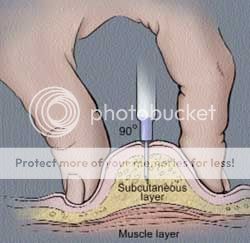
  • Subcutaneous administration can be given straight in at a 90 degree angle, or at a 45 degree angle. Give the shot straight in at a 90 degree angle if 2 inches of skin can be grasped between your thumb and first (index) finger. If only 1 inch of skin can be grasped, give the shot at a 45 degree angle.
hold syringe for inject
How can I get rid of used syringes and needles? Your caregiver may have given you a hard plastic container made especially for used syringes and needles. If you were not given this kind of container, look around your home for a hard plastic container with a screw-on top such as:
  • A clothes softener bottle or a hard plastic detergent bottle for washing clothes.
  • Make sure you can put both the syringe and needle into the container easily. Whatever container you choose, make sure that the needles cannot break through the sides, bottom or top.
How do I get product from the vial? A vial is a small bottle with a plastic or metal top covering a rubber stopper. The vial may hold enough peptide dose for one or more admins. If the vial will be used for more than one dose (a multiple dose vial), make sure you write the date you open it on the vial. The peptide for research may be a powder or a liquid.

Never re-use needles, dispose after use

Used needle deterioration

Reconstitute Melanotan II:

  • Remove a syringe from its wrapper. Two syringes are required when beginning a new vial. The first syringe is needed to add the liquid, bacteriostatic water in most cases. The second syringe is needed to administer the shot.
  • Take the metal or plastic top off the sterile saline or sterile distilled water vial. Do not take the rubber stopper off.
  • Use an alcohol wipe to wipe the top of the vial with the sterile liquid used to add to the powder. Wipe the top of the vial with the powdered medicine in it. Do not touch the tops of the vials after wiping them.
A vial has a certain amount of pressure in it. When air or liquid is removed, it must be replaced.
  • You need to add air to the vial in the same amount that you plan to take out in order to get the peptide dosage out of the vial. To do this, you must know how much product mg or mcg or iu/units to inject.
  • Pull the plunger on back to the peptide calculator dosage planned to administer.
  • Insert the needle into the vial and push down on the plunger.
  • Once the air has been pushed into the vial, turn the vial, attached to the syringe, upside down. Make sure the tip of the needle is in. The peptide will come back into the syringe and stop at or near the correct place.
  • When you have the correct amount in the syringe, remove the needle and carefully.

Things that may go wrong:

  • If you put in too much air, the plunger will be difficult to push.
  • If you do not put in enough air, the plunger will be difficult to pull.
  • If you are using a multiple dose vial, too much or too little air may have been put in for a previous dose. If so, you will have to adjust your pull or push on the plunger.

Agreement:

You have the right to care for yourself or your loved one at home. To help with this plan, you must first learn how to give a subcutaneous injection. You always have the right to refuse the instructions on this sheet.
The above information is an educational aid only. Talk to your doctor, nurse or pharmacist before following any medical regimen to see if it is safe and effective for you.

More...


Mutant's Insulin Protocol

Mutant's Insulin Protocol


Ok, so after talking to some professional and elite bodybuilders, I have learned quite a bit about what a well known professional trainer is having these bodybuilders to do to obtain the extreme amounts of weight they have been added to their bodies. It's simply taking their insulin pre-workout, combined with 3 "shakes". I looked at this Insulin protocol, and the ingredients in the shakes, and designed my own Insulin Protocol to better suit my goals and routine. I use better quality of ingredients in my shakes, and added my HGH pre-workout, and igf-1lr3 post workout as well.

Now, the theory behind this insulin protocol is, "Why break the body down, only to rebuild it? When you can simply keep adding onto the Body!"

So basically, by forcing the carbohydrates and Essential Amino Acids into your muscles while you train, the muscle tissue is not breaking down in the same manner that they normally would. It is actually being both protected and forced to grow at the same time. I have not done too much research behind the theory, but it sure sounded good to me, based on what I know about enhancing drugs and supplementation. I prefer trying things out myself, and going by results. Well, the results were spectacular.

Before I begin, I want to say that this typed out protocol is just a base. It is to give you a base to work from/with. Everybody is different. Some people will need more or less carbs and amino acids. This is based on the amount of insulin that they are using and how their bodies react. This is why I gave a range for the supplements and insulin doses. You will need to adjust it based on how you react. For the carbohydrates, always start high, and lower it accordingly, once you get the feel of it.

We start off by taking our HGH, and give it a few minutes to get circulating, before we add our insulin. The idea behind this, is to make sure that the HGH passes the liver while we have a substantial amount of insulin in the body. This is how we produce large IGF-1 spikes. After the workout, we go home and take our IGF-1LR3. We are taking this to increase our insulin sensitivity, and to help use up any of those receptors that we have not filled. I could go more into detail, but if you are using this protocol, you should already know all about the drugs, and should be able to put it together yourself.

- -30 min prior to workout: Take 10iu HGH subq

- -15 min prior to workout: Take 6-16iu Novalog subq

- -10 min prior to workout: Drink shake #1

- -After every working set: Sip on shake #2, and finish by end of workout

- -Go home

- -Take 100mcg of the IGF-1lr3 (for it's insulin sensitizing effects)

- -Take down shake #3

- -Done..now you are huge


Ok, now what is in the shakes...

Shake 1: 10-20g EAA's or PeptoPro, 40-60g Low DE Maltodextrin, 5g Micronized Creatine Monohydrate, 200mg Caffeine (or pre-workout powdered mix of choice in place of caffeine)

Shake 2: 10-20g EAA's or PeptoPro, 50-100g Dextrose, 5g Micronized Creatine Monohydrate

Shake 3: 2 cups pasteurized egg whites, 1 cup dry oats, 1 banana or 1 cup blueberries (I prefer them to be frozen), splenda or stevia

*There is no need for a supplemented post workout shake because your glycogen will not be depleted, and you will have been ingesting aminos the whole time too. So dense whole food calories with low fat content, are going to be the best option here. So we throw it in a blender and take it down.

Now, I would like to advise you cheap-skates, not to go out and buy the cheapest ingredients that you can find. Please pick quality supplements. It does and will make a difference. Spend the extra 2$ and buy some quality shit, or your results may be skewed. Thinks about it this way: Your body is a Lamborghini. Would you fill your tank with low grade octane from Costco? No, of course not, it would run like shit. So use quality supplements, not bulk junk crap, and your results will be that much better!

Supplement idea for those of you who need to be pointed in the right direction:

EAA's: Champion Nutrition makes a good EAA product that has creatine in it, and also one that has caffeine too. It's called Amino Shooter. There are 3 versions. None are a proprietary blend, and they are made with pharmacy grade aminos.

PeptoPro: This can be used in place of the EAA's. It is a high quality peptide/EAA product made from hydrolyzed casein. Different companies buy PeptoPro and flavor it. One brand I have tried that is flavored is MAP by Primordial Performance.

Low DE Maltodextrin: This means Low Dextrose Equivalency. The lower the equivalence, the more complex of a chain it is, and the slower it will break down into a sugar. A couple good ones are Carb Complex by Nutek, and Cytocarb 2 by Cytosport. If corn maltodextrins give you stomach problems, then other water soluble carbohydrates like Karbolyn can work. They just tend to be expensive, and do the same exact thing. Some people that have used this protocol with success, have actually used dextrose in place of the maltodextrin due to stomach problems.

Dextrose: Yes, you can find this anywhere, but I prefer AST's DGC because it also contains vitamins.

Micronized Creatine Monohydrate: Well, the name says it all. Any brand that uses Creapure as the source of their creatine monohydrate, should be just fine. I use Bioplex.

*Do not use cheap starch carbs, like waxy maize, in the shakes. The carbs need to be water soluble and easily digested. By keeping them soluble, they help pull the aminos in.

I decided to throw this protocol together after I had my leg surgery, in hopes of gaining some abnormal amounts of muscle back that I had lost. I can tell you that I did, and this protocol works better than any protocol I have ever used. I started off at 204 - 205lb, and ended up at 234 after 4-5 weeks! I was taking anabolics on the side, but I guarantee that amount of insane weight, that fast, was not from the long estered steroids I was taking. I literally filled out instantly. When I dropped the insulin, I only lost a few pounds of water, and retained most, if not all, of my strength. So the gains were very solid, and not just a bunch of glycogen storage.

I do not want to post this on the open forums because there are too many idiot kids out there that will attempt this protocol in hopes of becoming an instant monster (which wont happen for them), and they will mess it up somehow. Maybe by being stupid, maybe by cutting corners, maybe by using cheap ingredients. Who knows? I don't need people hurting themselves, or not having good results, and them coming back and complaining. Even though they were the ones cutting corners!

So, there it is boys. Some people are paying big money for this type of info. It's nothing special. It's just different, but it makes sense and it works.

*Added note: Since this protocol was designed and posted, a handful of advanced users have tried it as part of their bulking regime. They have also had great success. all you need to know insulin protocol
 

Good Luck and Stay safe MUTANT


More Peptide Info...


Blast Protocol: HGH IGF Insulin

Blast Protocol: HGH IGF Insulin

I highly recommend using a minimal schedule for all short chain sequence peptides, which include igf, insulin and even gh. I recommend using no more than 3 days per week, 2 days is fine, but no more than 3. The reason for this is that we are trying to prevent cell over-saturation and closure. All three products should be used in a similar manner.
The protocol is as follows; inject all products post workout, preferably after training large muscle groups which cause the most glycogen depletion, hence providing faster uptake of peptides. A sample layout is to inject Monday, Wednesday, and Friday.

Immediately post-workout inject 10-15iu of growth hormone IM, using a insulin pin and inject in any small muscle group such as delts, triceps, or biceps. Wait 20 minutes for the half-life clearance and conversion to igf to begin its sequence from the growth hormone and then inject a small dose of igf to create a synergistic super charge of the conversion process. I would recommend no more than 30mcg at this time. 10 minutes later you will take Humalog insulin only, and inject 5iu. I recommend starting with 5iu because Humalog has a very rapid onset and is easy to control with sugar. In conjunction with igf, you will be hyper-sensitive to insulin so start small and slowly work your way up to a maximum dose of 12iu post-workout. You will want to have around 80-100 grams of simple sugars such as dextrose and grape juice and an additional 60 grams of whey protein at the same time as your insulin. You will then eat another moderate glycemic index meal one hour after your high glycemic shake.

The reason for the high dose growth hormone is to take what would normally be your one week intake of gh and spread it out into 3 equal doses, injected pwo. This will create a truly anabolic rich environment and you will also benefit from full uptake due to your pwo depleted state.
So there is our post-workout regime, 3 days per week. Certainly you should take more than this, shouldn’t you? For most lifters, this protocol will be sufficient for growth. For someone with at least 6 months of gh use, 5 or more cycles of insulin and who no longer responds to typical igf protocols, the following regime may be followed: In addition to the above outline post-workout method, you may add additional doses of igf as well as insulin on the same day as your post-workout injection.

I would highly recommend you take 15mcg igf an additional two times per day. By taking less igf more often you will prevent cell over-saturation as well as receptor down-regulation. Creating a cell rich environment that saturates the cells infrequently will target massive cell proliferation. In addition you will take insulin 20 minutes after the igf on those 2 additional injections creating an anabolic rich environment that will last all day, 3 days per week.
For a sample protocol for someone that works out after work, I would recommend you do the following: Take 15mcg upon rising in the morning, followed by 10iu Humulin R or Humalog 20 minutes later. Immediately eat a carbohydrate rich meal with quality protein and low fat such as bananas, oatmeal and egg whites.
For lunch, take another 15mcg igf with 10iu insulin and have another moderate glycemic carbohydrate meal and protein with minimal fats. Follow the above listed pwo protocol to complete your three time injection schedule which will be used three times per week.

If you follow the outline laid out for you above to the letter, you will put on a massive amount of lean mass with a minimal amount of fat. You will need an anabolic and androgen rich environment to complete the schedule such as testosterone and tren in addition to the peptide products. T3 and T4 will not be necessary on this schedule as your thyroid levels will not be affected.


By: Gavin Kane


More Peptide Info...


insulin & bodybuilding

insulin & bodybuilding


insulin
Your body releases insulin to dispose of unneeded sugar. While insulin is an extremely anabolic hormone (actually the most anabolic hormone known to man), there is a definite disadvantage with insulin spikes caused by too much sugar. insulin triggers energy stores to open up and helps to shuttle nutrients into storage areas. Adipose cells readily accept nutrients to be stored as bodyfat shortly after the introduction of insulin. insulin opens the 'doors' in adipose for bodyfat storage for a very short period of time. It takes a high level of insulin to force open the adipose doors.

insulin doesn't affect bodyfat storage as long as the insulin levels rise slowly and remain fairly consistent. Throughout the day, sugar consumption can spike insulin levels and induce bodyfat storage. Eating a high carb diet without sugars will cause a steady release of sugar into the system causing a high level of insulin release, but since the rate of release is steady, it does not trigger an 'open door' in adipose for bodyfat storage but provides an extremely anabolic environment as the benefits of insulin are realized. Complex carbs are a much bigger molecule than simple sugars. They have many sugars bonded together. To turn complex carbs into glucose, they must be broken down. There is a series of steps that they must undergo to be broken down. Enzymes must be present to break each molecular bond of these polymers. All this takes a while to complete. By the time some of it is broken down into glucose, in the small intestines, some of it has already passed into the large intestine where absorption is almost completely ceased. This process allows for a slow and steady rate of glucose production that fuels the brain and muscles throughout the day without causing a release of insulin. This is very important because, as previously stated, you don't want insulin in your body during a workout; you need its recipicle, blood sugars.

Animals release natural sugar stores, glycogen, for energy. The body will regulate itself with insulin when it no longer needs the sugar in its system. It doesn't matter whether the sugar comes from internal (from glycogen) or ingested sources (table sugar), insulin is released to counteract it. There will be rushes and fatigue with high consumption of sugars as your body tries to regulate itself. It can be almost impossible to workout when one's blood sugar levels are low due to sugar consumption beforehand.

insulin signals the body to begin repair after a workout. Your body thinks that glycogen has been released when sugar is present in the bloodstream. Why? Glycogen (blood sugar) is released when your body meets high output demands. After strenuous activity, the body has to repair. When one is undergoing activity such as weightlifting, he needs energy, glucose from broken down glycogen. insulin is released after the workout to counter the now not needed glucose level. When muscles sense the presence of insulin, they see that its time to begin healing and recuperation. insulin 'opens doors' in the muscles to accept nourishment and helps to shuttle in vital nutrients such as amino acids.

Just imagine your muscle cells as having an irresistible attraction to insulin, a chemical attraction. The insulin wants to get into the muscle. What is so significant about insulin is its chemical make up. Its structure causes it to bond to nutrients. Nutrients include creatine, prohormones, anabolic hormones, some vitamins, minerals, glutamine, and other amino acids. This is the cause of the 45-minute window for taking supplements and refueling your body for the nextworkout. The body sucks up needed amino acids during this period. Remember, muscle tissue is made from the assimilation of various amino acids. So, to have protein synthesis within the muscles, your cells must have sufficient amounts of various amino acids. Glutamine is the biggest component of muscle fiber. Adequate glutamine is essential for the addition of new muscle. All of these nutrients are sucked into the cell for 45 minutes due to the increased amount of insulin in the body after a workout, and because the muscles themselves are 'starving' for them, a phenomenon called intercellular thirst.

With this in mind, you can see how ingestion of huge amounts of sugars after a workout is beneficial. Your body will have some insulin naturally released after the workout but the more, the better in causing a hormonal environment that's good for forming new muscle. IGF-1 (insulin like growth factor), a Growth Hormone, is also released in the presence of insulin. Growth Hormone is what causes gigantism. That's one factor in determining why some people are mesomorphs and others are ectomorphs. It's why people like Andre 'the Giant' don't even have to work out to be huge, but if they do, they gain much more muscle than the normal person. The growth hormone is released by the pituitary gland.
Think about this, what if you could have a spiked insulin level all throughout the day? You've already learned that you don't want extra insulin just before a workout because it will hinder the breakdown of the muscle fibers. But imagine a 24-hour insulin spike. That would be the most anabolic environment one
could ever hope to achieve. So how do you achieve that? Well that's one of the biggest dilemmas faced in the underground world of competitive bodybuildingtoday. And in fact it's one of the biggest reasons that bodybuilders are bigger, stronger, and more defined than bodybuilders ten years ago. They have employed the injection of artificial insulin.

Imagine, all day long, almost everything that is consumed is converted into anabolic fuel. insulin is more powerful than any steroid ever formulated. But it's also the most dangerous. Bodybuilders inject incredible amounts daily. The pancreas may soon stop its own production of insulin and the body can become solely dependent upon the exogenous injections. One could cause himself to become a life long diabetic. They sell their health to the sport of bodybuilding.

Well, this should show you the importance of insulin in the bodybuildingworld. The main theme of insulin is: complex carbohydrates inadvertently cause a slow but steady release of insulin all day long. So, if you up your consumption of complex carbohydrates, you put your body into a more anabolic state without
artificial insulin.

Never drop carbohydrates from your diet no matter what you hear unless you want to end up fatter with more flab and less muscle than you did before you started your 'diet.' People have made millions because they get a degree and come up with a new 'diet' plan and sucker people into following it and inadvertently wreck their bodies in the long run. If you drop carbs, even though you consume vast amounts of protein, your body will not be as anabolic, and you will loose muscle. Cut back the fat from your diet and increase the complex carbs as high as you can. EAT EAT EAT. That's how you loose weight. Not that
everyone is looking to loose weight per se, but gaining muscle = loosing bodyfat. Muscle is the only mechanism by which to burn fat (except from heat that is produced through various means).

I'll reiterate upon one of the advantages of this 45-minute window. After strenuous activity, your body is more receptive for storing up energy as glycogen than any other time. Glycogen is not stored as fat. It's stored in the glycogen stores. Ingestion of sugar at this time will allow it to be stored as energy to be
consumed during the healing process as well as your fuel for the next day and the next workout.

The body is most receptive within 30 minutes of a workout. After 45 minutes, it begins to taper off drastically. The protein and carbs that you consume after a workout would be more beneficial for you if they were in a liquid form, such as a whey protein drink or meal replacement shake. Solid food must sit in the stomach and wait on digestion before it will be sent to the small intestine where the needed nutrients will be absorbed. It's a race against the clock. This is your critical time. About an hour to an hour and a half after a workout you can eat a good meal. To eat it before then will cause your sugars and proteins to have to sit in the stomach until the rest of the solid food can be broken down before it is absorbed. You don't want to hinder the absorption of liquid proteins and sugars. Also, casienate (a protein supplement) should be avoided at this time due to the fact that stomach acids cause this protein to gel and it takes considerably longer for your stomach to digest it.

Be careful not to ingest any sugars before your workout. You don't want insulin in your system during a workout. This is for obvious reasons. insulin depletes blood sugar. With low blood sugar, your can't make strong muscular contractions. You will be holding down your gas pedal for growth while you are holding down your brake for muscle breakdown. The only reason a muscle gets bigger is through the body adapting to stress by not only repairing the muscle from this breakdown, but repairing it to be MORE powerful than it was before.
author ???????????


More Peptide Info...


Why Insulin works: Androgen - Insulin Synergy

Why Insulin works: Androgen - Insulin Synergy

Should anabolics be used with insulin or is it best to use insulin while off steroids in order to hold onto muscle mass?
We are going to demonstrate that they have to be used together. We will also try to provide some clues about their respective contribution to the synergy both hormones create. This will help us to handle both drugs better.

Here are some general observations:
It is safe to conclude something else is needed to uncover the full anabolic effect of steroids. The hormone which is the most affected by a high calorie or by a low calorie diet is insulin. Also, heavy steroid users know that past a certain amount of steroids, adding insulin will make a big difference as far as muscle gains are concerned. Insulin is thus a strong candidate as a potentiator of anabolic steroids (which we will indiscriminately refer to as androgens, steroids or anabolics). Furthermore, studies performed in trained dogs have shown a lack of insulin completely negates the anabolic effects of steroids on protein synthesis. There are some easy hypotheses such as a possible androgen receptor up regulation, a stimulation of androgen secretion, an antiaromatase effect arising from insulin. But, there is still something missing.

Using anabolics plus insulin will not make you much bigger unless you weight train. The synergy can only be realized if insulin + steroids + training are present. What is the link between those three factors?
A very likely candidate is an enzyme called insulinase. As its name implies, it is an enzyme responsible for the destruction of insulin. But we are going to see it does much more than that.

It is found inside many tissues of the body, particularly in muscle. What science is telling us is that insulinase is essential for insulin to provide its anti-catabolic effect on our muscles. It is also likely that insulinase is able to multiply the anabolic effects of androgens. It's worth repeating: insulin cannot stop protein catabolism without insulinase and the effects of steroids are potentiated by insulinase. It sure looks good.

Androgens are very powerful stimulators of the muscle protein synthesis rate. On the other hand, the muscle gains provided by androgens do not match this elevation in synthesis. steroids promote anabolism to a much higher rate than they make our muscles grow.

The reason for this discrepancy is that they also stimulate protein degradation. I know many people think they are anti-catabolic, but it is not the case. Anabolics stimulate protein turnover. This means they increase both synthesis and degradation of proteins. They are simply more effective at stimulating synthesis than degradation, which is why they make our muscles grow but not at a super fast rate. Look at how long it takes to grow huge muscles. If androgens were stimulating synthesis while inhibiting degradation, one would grow very, very quickly.

This is where insulin comes in. As we said, it mostly reduces protein degradation rate. It might stimulate protein synthesis right after training, but this effect is very limited in duration. Ideally, using insulin along with steroids would allow us to accelerate synthesis (thanks to anabolics) and reduce degradation (thanks to insulin). This is the best way to grow muscle fast.

Unfortunately, as both insulin and anabolics need insulinase to work better, they will compete against each other for this enzyme. For natural athletes, the supply of muscle insulinase should roughly meet the demand. Now if you add anabolics, there will be less insulinase for insulin. If you do not take too high a dose of steroids, the level of insulinase should still be sufficient to allow a fair insulin-induced anti-catabolism.
But as you take more steroids, the insulinase available for insulin will be lower and lower.


Insulin will lose its anti-catabolic effect. As it will still bind some insulinase, the enzyme availability for steroids will not be optimal either. Anabolics will lose some of their potency.

What is important to understand is that past a certain dose, anabolics will provide their own antidote against muscle growth. The only solution (beside using less steroids) is to increase insulinase level.

At least two factors can accomplish this feat:
The first one is insulin itself. The higher the insulin level is in a target organ (muscle for example) the higher the insulinase level will be. You would expect that the body would detect the shortage of insulinase for insulin and so produce more insulin (or more insulinase).

Unfortunately, this does not seem to be the case. While insulinase is crucial for the anti-catabolic effect of insulin, it does not seem as important for glucose disposal.

Insulin's main function is not to assist in muscle growth but to control glucose homeostasis. As a result, it is likely our body does not really care about a relative shortage of insulinase. In any case, we are left with a less than optimal equilibrium. It is up to the bodybuilder to react to this imbalance.

One way of increasing insulin secretion is to eat more, but you can only do so up to a point. You cannot increase your carb intake in parallel with the amount of steroids without getting too fat. Another solution is to use drugs to add or to stimulate insulin secretion. This way you get the insulin without the excess of calories.

In any case you now understand why steroids work better while on a high calorie diet while they lose their potency during a diet or a shortage of insulin.
Here is a way of "artificially increasing insulin level": One dose of long acting insulin first thing in the morning (this is the only injection). Before each meal (except the pre-workout one), take a sulfonylurea (an oral anti-diabetic drug which will boost food induced insulin secretion ). I like Glipizide because of its short half-life. In case you experience hypoglycemia, you know it will not last. This is the main problem with the long acting sulfonylureas. When you are hypoglycemic, you try to compensate by absorbing carbs. But the drug will make your pancreas secrete even more insulin before the carbs can hit the blood. It makes the hypoglycemia worse - not better.

In case of problems, make sure you get some ready-to-inject Glucagon (sold as "insulin emergency kits" in drugstores). An additional benefit of the Glipizide is that it induces the release of GH on top of insulin which is beneficial for non diabetics.

This is a nice way to fix the reduced anticatabolic property of insulin. Unfortunately, this will not yet provide the optimal amount of insulinase to have steroids work better.

We said that training was the third key ingredient in this synergy. This is because training can stimulate insulinase activity. Not any exercise will do. The traumatic ones inducing muscle soreness are the most effective. It is the factors inducing soreness which will trigger this increase in insulinase.
On the other hand, you do not want to create too much soreness as it will temporarily reduce the effects of insulin and androgens by impairing their effects at the level of their respective receptors. What you want is mild but frequent soreness along with some very frequent pumping sessions.

Do not forget both androgens and insulin circulate in the blood. The more blood you get into the muscles (and the longer it stays), the more your muscles will be "drenched" in those two hormones. Please note that insulinase is produced locally in the trained muscles only. It does not circulate into the blood.

By Michalovich Greutstein


More Peptide Info...


How to use Insulin - the most anabolic hormone

This is pretty much a beginners guide to getting started on Insulin.

Directions for first time Insulin users 

Insulin is the most anabolic hormone you can take. On the other hand its also one of the most dangerous for two reasons availability and ignorance. I will be the first to tell you that every time I have been hypoglycemic (when blood sugar drops to dangerous levels) its has been as a result of something I did wrong. Used responsibility and with respect for the potential sides it is quite safe and extremely effective. That being said we'll start off with what you are going to need.

Equipment:
There are several types of Insulin out there but for our purposes we are only interested in two. The first being my favorite Humuling R and the other being a bit newer to the body building community Humalog.

Humuling R is the most widely used and time tested Insulin in our arsenal. It has a max duration of 4hrs and its peak can been seen around 2hrs after injection. This becomes particularly important when planning out you meals for the day so keep the timetables in mind.

Humalog is a bit newer but some feel just as effective and a bit safer. Humalog has a max duration of 2hrs and its peak can be seen around 1hr after injection. When selecting to use one or the other keep in mind your schedule, meals, and physical activity for the day as it will all play a role. One other point that needs mentioning is that Humuling R is available over the counter at pretty much every pharmacy in the country for about $25 for 10ml (which will last you a very long time) and Humalog is available only through a prescription or over the black market for a price about double that of Humuling R. When approaching a pharmacist keep in mind that its a lot more convincing if you buy the needles at the same time you get the Insulin. This way they are less likely to refuse to sell it to you which they have been known to do from time to time. If this should happen just continue on to the next pharmacy and despite what they tell you "you don't need a prescription" it might be their store policy to see one but legally it is not required and if you make enough of a fuss you will get what you need.

The next thing you will need is the actual needles for injection. These are not the same type that you would use for anabolics or other androgens. The type of needles you will need are U100 Insulin needles. That is exactly what you need to say when are trying to buy them. A box of 100 will usually run about $15-$25 and again will last you quite a while. Be fore warned now, using a syringe labeled with cc/ml or anything other than u100 is potentially fatal. The difference between the amount of Insulin used for our purpose and that which will kill you is less than 1/2 a cc.

The next two things I think you will need and I highly recommend having on you is a wrist watch with a chronograph (stopwatch) and glucose tabs and/or a can of soda. First I'll explain the wrist watch. The stop watch is to be started immediately after the injection and monitored periodically to keep track of what is in your body and how long it is active. This can also be used to determine whether or not you are feeling side effects or simply just nerves from the fear that follows using for the first time. For instance I always use Humuling R which we know has a duration of 4 hours and a peak at 2 hours. This means that the greatest effects will be felt somewhere between 1-1/2 to 2 hours after injection and then they will steadily lessen till it is no longer active 4 hours after injection. When you use a stopwatch you have an accurate record of when you felt the effects which will become more important as you get more experienced using Insulin. The glucose tabs are your safety net. If you are feeling hypo (hypoglycemic) these tabs will return your blood sugar levels to a safe range where you can get some food. They are available at all pharmacies for about $1.00. I have also used a soda. Soda is high in simple carbs which act quickly when blood sugar is low and allow you to get to a safe range where you can get some food in you. Now that we've covered all the equipment needed to safely use Insulin we'll move on to dosage diet and scheduling.


Dosage diet and scheduling:
Whenever you start Insulin its always wise to start at a lower dose and taper up over the first couple of days of use. Insulin is still new in our community and there is a potential for becoming diabetic so don't take chances start small more is not better where Insulin is concerned more is simply more fat and more dangerous. This is a schedule I use when just starting Insulin:
day1: 5iu's post workout
day2: 6iu's post workout
day3: 7iu's post workout
day4: 8iu's post workout
day5: 9iu's post workout
day6: 10iu's post workout
day7: same as day 6

This concludes week once from here on out this is how I proceed. If I am going to be increasing my dose even further.

day8-10: 10iu's morning, 10iu's post workout
day11-14: 10iu's morning, 10iu's noon, 10iu's post workout
day15 and on: increase post workout dose till I start to feel symptoms of hypoglycemia and then back the dose down accordingly. THIS IS ONLY FOR ADVANCED USERS, DONT EXCEED THE DAY 7 DOSE TILL YOU GET SOME TIME UNDER YOUR BELT. I AM NOT KIDDING YOU WILL DIE!!!

Your diet will depend on the amount of slin you take per injection. The rule is 10 grams of carbs per IU of Insulin. Therefore if you take 10iu's at an injection you need 100 grams of carbs. This is a bit overkill the actual figure is about 5-7 grams but its best to stick with the 10 rule while starting out. I feel that the best most accurate way to consume the proper amount of carbs after an injection is through MRP's or other shakes. The amounts of carbs on these are far more accurate than those you will find on the back of a bread bag. My meals are usually laid out like this:

7am: 10iu's Insulin, shake
9am: shake
12pm: 10iu's Insulin, lunch
2pm: shake
4pm: shake
6pm: workout
7pm: 10iu's Insulin, shake, higher in carbs than others
9pm: dinner
11pm: safe for bed

If you'll notice there is a method to the madness above. After taking your first injection if Insulin you will need a shake immediately. After this you are good for the next 2 hrs till the Insulin peaks. Once you hit the 2hr mark you will need more carbs either another shake or a meal with sufficient carbs. After you have cleared the 4hr mark you will be clear from danger. Now this is all based on using Humuling R. If you are using Humalog you will need to take your first meal after injection and another "1hr" after. Then after the 2hr mark you will be safe. My shakes are made up of 1/2 pack of MetRX (berry) and 2 scoops GNC brand weight gainer (vanilla) and 16oz of whole milk. This shake has a caloric value of about 800 cals and around 50grams of protein and 150+grams of carbs. This is a good meal for those starting out. As you progress though you will want to decrease the carbs and eliminate the fat completely to maximize lean mass gains and minimize water and fat retention but for the purposes of starting out simply taking T3 will offset any fat gained. One thing to keep in mind is that T3 will reduce your sensitivity to Insulin allowing you to take a higher dose but again save this till you get some more time in.

Side effects and procedures:
After injection and starting your stopwatch your first task is to get some carbs in. Next the first sides you will feel is tired. This is normal and is to be expected. You will usually feel this somewhere between 15-30 minutes after your injection. The key here is not to sleep, if you sleep you wont feel further more dangerous sides and therefore you wont be able to save your ass. The next thing you need to do is have another meal/shake at the 2hr mark. If you miss this just get it in as soon as possible. If you delay long enough you will start to feel hypo around 3 to 3-1/2 hours after injection. When this happens you will feel a sort of numbness that I can only relate to ephedrine. After this you will start to get some shakes in your hands followed by a cold sweat. Once you get to this point you are full blown hypo, the next thing that will follow will be a bit of tunnel vision and this is as far as I’ve been after this its all textbook I imagine coma will follow shortly after passing out. When you get the symptoms listed above don’t hesitate. Get some soda/glucose tabs followed by a meal or shake. One other fact I neglected to mention is that a mix of carbs is necessary when consuming a meal. Simple carbs are used to quickly and complex don’t kick in fast enough. A good mix is the way to go.

by Juice Junkie.

If you have any questions or wish to discuss it further Please stop by here - http://www.worldclassbodybuilding.com/forums/f485/how-to-use-insulin-the-most-anabolic-hormone-39134/


More Peptide Info...